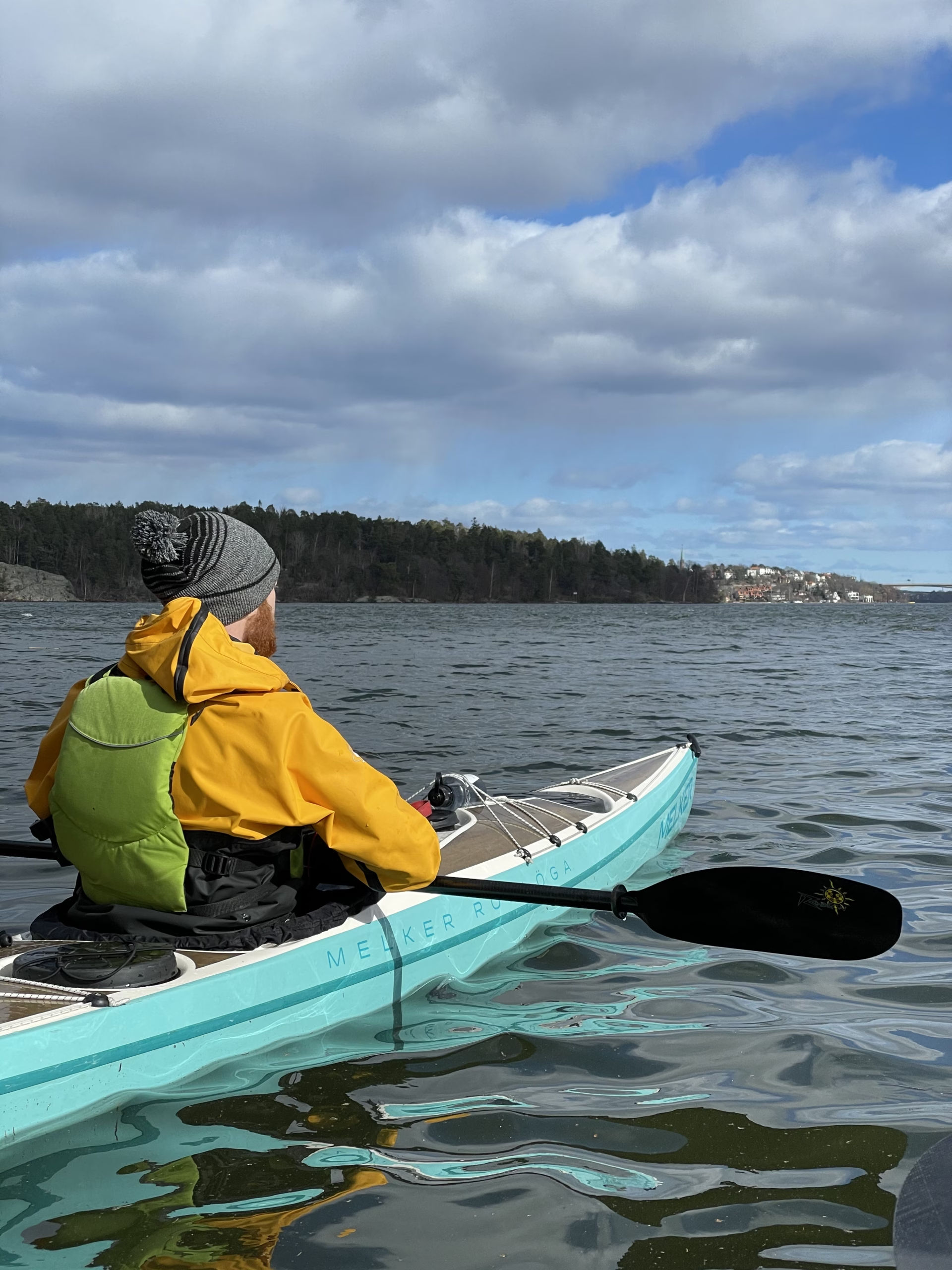
Nature has become our most important place for recovery. More and more people are stepping away from screens and stress to find an uncomplicated break in their everyday lives – a genuine outdoor life for recovery. Gliding across the water is a smart choice to lower your heart rate, a fact supported by the well-known Blue Mind research, which shows how being near water demonstrably calms our brains. Here in Stockholm, we have the luxury of going on small, urban “micro-expeditions”. We always say that the best adventures are often the ones that start just around the corner.
Here in Stockholm, we have the luxury of going on small, urban “micro-expeditions”. We always say that the best adventures are often the ones that start just around the corner.
City pulse and nature: Around kungsholmen
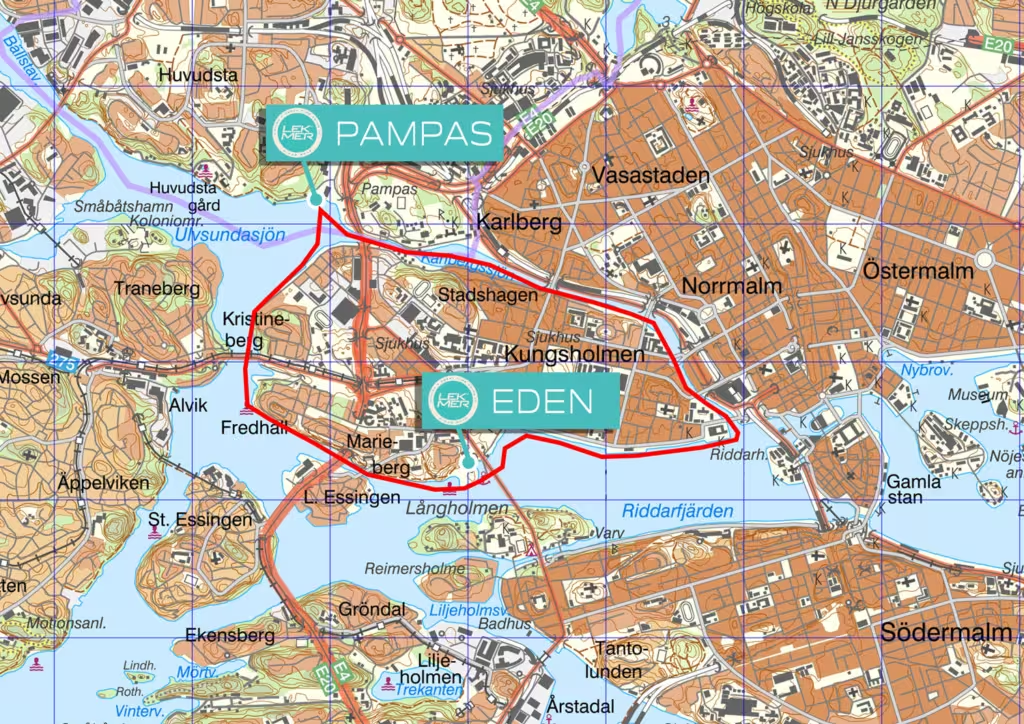
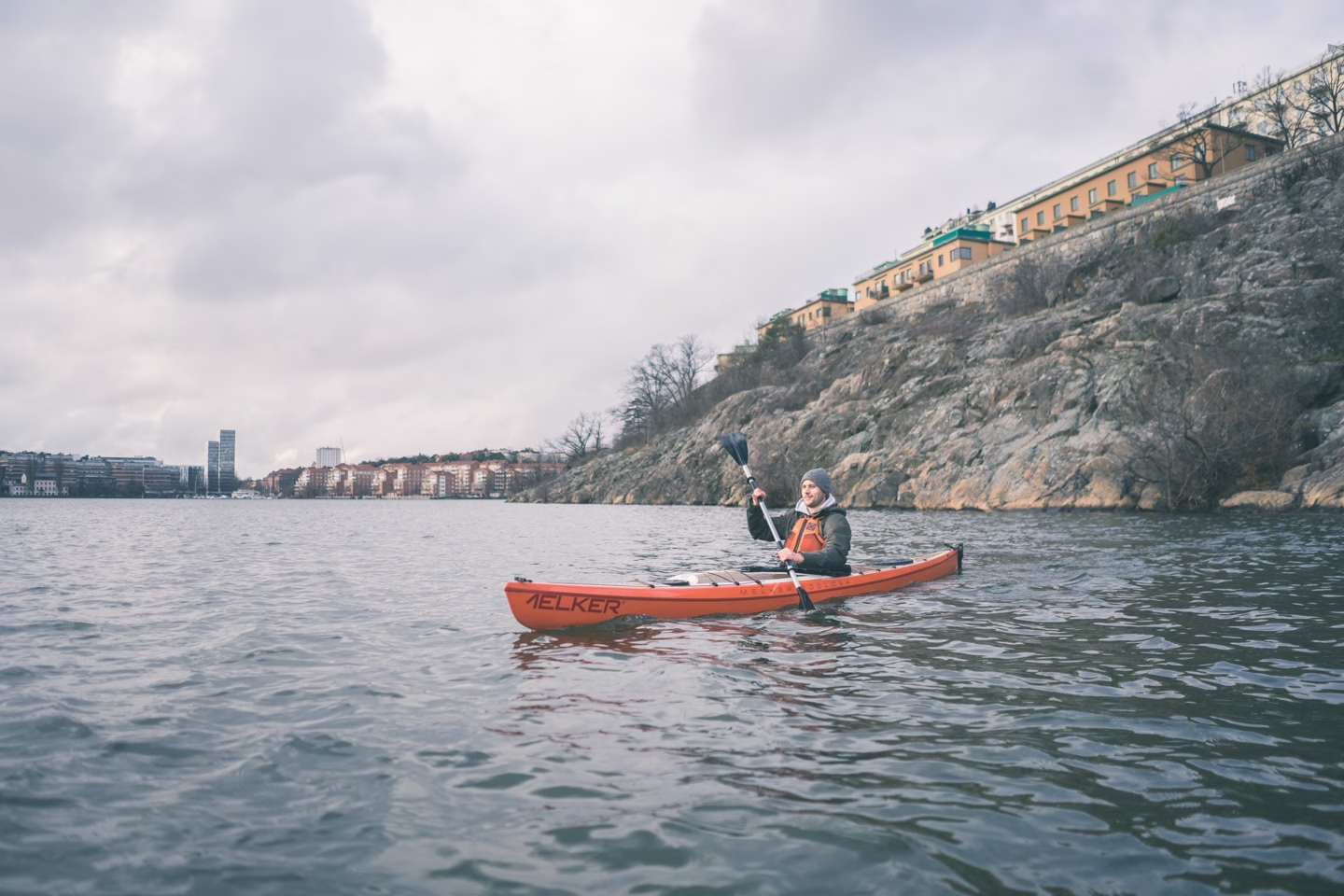
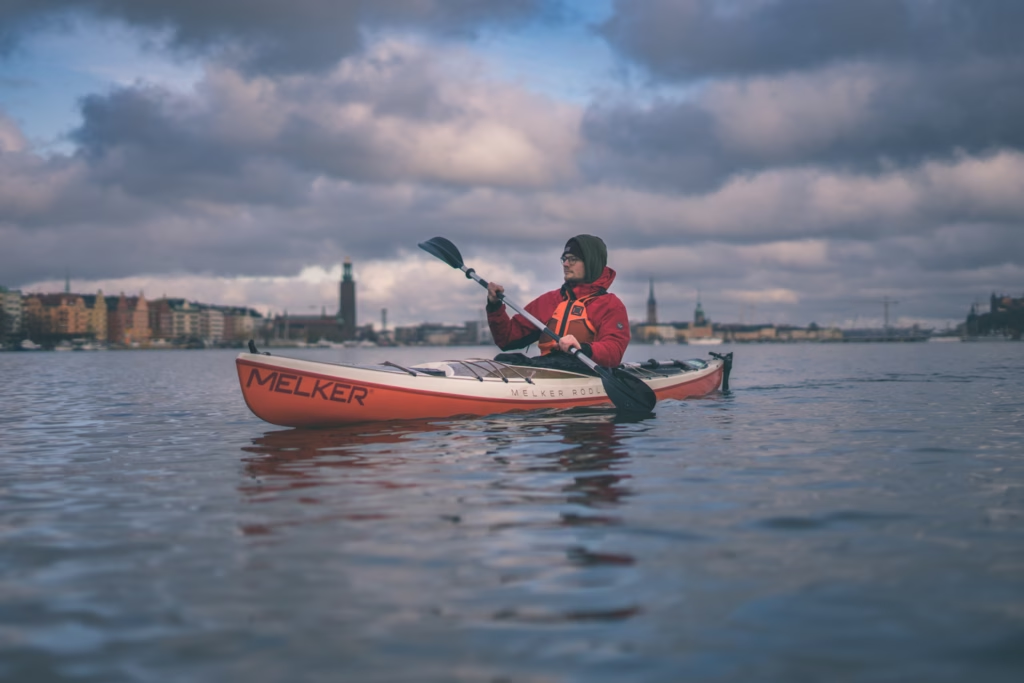
If you are looking for fun things to do in Stockholm, the classic tour around Kungsholmen by kayak is a brilliant idea. You can start your journey at Pampas Marina, glide through the leafy Karlbergskanalen, and then pass the majestic City Hall. Finish your tour by paddling past Långholmen, Lilla Essingen, and Fredhäll. It is a route that offers both beautiful architecture and green shorelines.
The Urban Oasis: Lillsjön For a different kind of experience, a tour of Lillsjön is an excellent tip. Although the city hum from nearby roads reminds us we’re still in the heart of Stockholm, the lake is a fantastic, mirror-like oasis. Because it’s so well-sheltered from wind and waves, it’s the perfect spot to practice your paddling technique or simply enjoy gliding through lush surroundings. Remember, we share the water with nature—please keep a respectful distance from nesting birds and pick up any trash you might spot in the water.
Paddling Day 2026 and Tips from the Dock On May 30, 2026, we are celebrating Paddling Day! It is a great opportunity to try out a SUP in Stockholm or rent a kayak for the day.
Here are two new tips from our instructors to enhance your experience:
The Power of Posture: For a more stable and powerful stroke, focus on a forward-rotated pelvis. By sitting upright and engaging your core, you gain better control of the kayak and reduce the strain on your lower back.
Mindful Paddling: Try “Mindful Paddling.” Sync your breathing with your strokes—inhale as you lift the paddle and exhale as it meets the water. This helps you find a meditative flow even while the city’s tempo continues around you.
Safety First Safety and the environment are at the core of everything we do. Always dress for the water temperature, not the air. This is especially vital during spring when the air feels warm, but the water is still dangerously cold. Please read our previous post on cold water risks and hypothermia to learn how to stay safe.
Always do a quick risk analysis before getting in – “what happens if?” – and never paddle alone. Always wear a comfortable life jacket.
When spring knocks on the door, I, for one, find it hard not to feel a strong pull towards the water. You know that first day when the sun feels genuinely warm and the ice has finally given way. The urge to paddle is often overwhelming. It’s a fantastic time, but it’s also a time that demands reflection and respect.
Personally, my favorite time to paddle is often in October. The air is crisp, the leaves are a fiery mix of yellow and red, and you often have the water all to yourself. A big advantage then is that the water has stored the summer’s heat and is often significantly warmer than the air. In spring, the situation is the complete opposite, and it’s this imbalance that this article is about.
This is not a text meant to scare you. It’s a text to share the knowledge and experiences I’ve gathered as a paddler and instructor. My philosophy has always been that with increased knowledge come better decisions, and with better decisions comes more safety. And it’s that safety that allows us to relax and experience true paddling joy.
The Deceptive Disparity Between Air and Water
A sunny April day in Stockholm can feel warm enough for a t-shirt. It’s easy to get a false sense of security. But beneath your kayak, a completely different reality awaits. The ice may have just melted, and the enormous body of water hasn’t had a chance to absorb any real heat. It takes time to warm up our Swedish waters, and it’s often not until sometime in May that the water starts to feel reasonably okay.
Why is this so important to understand? Because water conducts heat away from your body about 25 times faster than air. If you end up in the water, it doesn’t matter how warm it is in the air. Your body will react to the water’s temperature, and only that.
More Than Just Hypothermia: The Four Phases of Cold Water Immersion
When we talk about the risks of cold water, most people think of hypothermia. It’s a real risk, but paradoxically, it’s rarely the most immediate danger. Most accidents happen long before hypothermia even becomes a factor. Research divides the process into four physiological phases.
Phase 1: Cold Shock Response (The first 0-3 minutes)
This is the body’s immediate, reflexive reaction to the sudden cold. It’s powerful and almost impossible to control with sheer willpower.
The “Gasp Reflex”: When your skin hits the icy water, a deep, involuntary gasp can be triggered. If your head is underwater at that moment, water can be drawn into your lungs, creating an imminent risk of drowning.
Uncontrolled Breathing: This is often followed by a period of intense hyperventilation. It can feel like you’re not getting enough air, even though you’re breathing extremely fast. This makes it very difficult to hold your breath or synchronize it with swimming strokes, which can easily lead to panic.
Cardiovascular Stress: Simultaneously, your cardiovascular system reacts. Your blood pressure and heart rate can skyrocket. For individuals with underlying heart conditions, this shock can be life-threatening.
If you survive the initial shock (a reliable life vest is absolutely crucial here), the next challenge begins. Your body desperately tries to protect your vital organs by restricting blood flow to your arms and legs.
Loss of Muscle and Nerve Function: Without a supply of warm blood, your muscles and peripheral nerves cool down incredibly fast. The result is a rapid loss of fine motor skills. Fastening a buckle, holding a rescue line, or even gripping your paddle can become nearly impossible.
Swim Failure: Next, the larger muscle groups are affected. The ability to swim or even tread water can quickly deteriorate and eventually disappear. Without a life vest keeping you afloat, the situation becomes extremely critical.
Phase 3: Clinical Hypothermia (After 30+ minutes)
Only if you’ve managed to stay afloat for an extended period, usually more than 30 minutes, does clinical hypothermia become the primary danger. The body’s core temperature drops below 35°C (95°F), and the process most people associate with freezing begins.
Phase 4: Circum-Rescue Collapse (During and after rescue)
This is a treacherous and lesser-known risk that anyone helping someone out of cold water should be aware of. When a person is lifted from the water, especially vertically, it can cause a sudden, dramatic drop in blood pressure. A hypothermic person must be handled very gently, preferably lifted horizontally, and should avoid unnecessary movement.
Tips from the Dock: My Checklist for a Safe Trip
Okay, this is complex stuff. But the goal is for you to be able to make wise decisions. Here are my concrete tips for a safer paddle in cold water, many of which I also demonstrate in our video on the subject.
Dress for the water, not the air. This is the single most important rule.
A drysuit is your life insurance. When the water temperature is below 10-12°C (50-54°F), I consider it a mandatory part of the safety system. It keeps you dry, which is critical.
Layer smartly underneath. Use wool or good synthetic materials. Avoid cotton at all costs! Cotton absorbs moisture (sweat) and actively cools you from the inside, even under a drysuit. Remember, the drysuit itself doesn’t provide warmth; the insulation comes from the layers you wear under it!
Head, hands, and feet. A warm hat or a neoprene hood is essential. Warm gloves and sturdy neoprene shoes or socks make a huge difference.
Your life vest (PFD) is your best friend. Always. I never paddle without one. It’s your guarantee to keep your head above water if the initial cold shock hits or if you lose muscle control.
Use the 1-10-1 Rule as a guide, not a law. The mnemonic (1 minute to get your breathing under control, 10 minutes of meaningful movement, 1 hour until unconsciousness) is good for preventing panic. But remember, in icy water, you might have significantly less than ten minutes before your hands stop working. Have a plan, but don’t assume you have plenty of time.
Paddle with company and have a plan. Having a friend who knows the basics of peer rescue is invaluable. Talk through your plan before you set off. Who does what if something happens? Practice together in calm conditions so the rescue becomes second nature.
Invest in your own knowledge. The best gear in the world can’t replace knowledge. Taking a course is the fastest way to build a solid foundation. It gives you a chance to practice rescues in a safe environment and learn how to avoid getting into dangerous situations in the first place. If you’re curious, we at Lekmer offer both Introduction to Kayaking courses and more advanced safety and technique courses.
Final Thoughts: Enjoy Paddling with Respect and Reason
Spring paddling is and always will be magical. The light, the quiet, and the feeling of nature coming back to life are hard to beat. By building your knowledge and having a humble respect for the power of the water, you can paddle safely and enjoy all the wonderful things this season has to offer.
Hope to see you on the water – in a safe and fun way!
/Emil
For the Curious: Links for Further Reading
For those who want to dive even deeper into the physiology and safety mindset around cold water, I highly recommend these resources.
För att ge en bra upplevelse använder vi teknik som cookies för att lagra och/eller komma åt enhetsinformation. När du samtycker till dessa tekniker kan vi behandla data som surfbeteende eller unika ID:n på denna webbplats. Om du inte samtycker eller om du återkallar ditt samtycke kan detta påverka vissa funktioner negativt.
Funktionell
Always active
Den tekniska lagringen eller åtkomsten är absolut nödvändig för det legitima syftet att möjliggöra användningen av en specifik tjänst som uttryckligen begärts av abonnenten eller användaren, eller för det enda syftet att utföra överföring av en kommunikation över ett elektroniskt kommunikationsnät.
Alternativ
Den tekniska lagringen eller åtkomsten är nödvändig för det legitima syftet att lagra inställningar som inte efterfrågas av abonnenten eller användaren.
Statistik
Den tekniska lagringen eller åtkomsten som används uteslutande för statistiska ändamål.Den tekniska lagringen eller åtkomsten som används uteslutande för anonyma statistiska ändamål. Utan en stämningsansökan, frivillig efterlevnad från din Internetleverantörs sida, eller ytterligare register från en tredje part, kan information som lagras eller hämtas endast för detta ändamål vanligtvis inte användas för att identifiera dig.
Marknadsföring
Den tekniska lagringen eller åtkomsten krävs för att skapa användarprofiler för att skicka reklam, eller för att spåra användaren på en webbplats eller över flera webbplatser för liknande marknadsföringsändamål.